DELIVERY AND LOGISTICS SYSTEMS, BUILT TO SCALE
From fleet management and route optimization to multi-sided delivery platforms — we've been providing logistics software development services to companies across Europe and the US since 2013.
at mind studios
We've spent ten years building custom logistics software — fleet management platforms, multi-sided delivery systems, and operational tools for logistics companies across Europe and the US.
This page is a look at the work we've done, the problems we've solved, and the patterns we bring to every logistics engagement.
Fleet Management & Operations
The hard part of fleet management isn't putting dots on a map. It's connecting what happens on the road to what happens in the back office - mileage verification feeding into payroll, route deviations triggering dispatch adjustments, courier schedules syncing with HR and finance.
That's what we built for Medienlogistik, and it's where most fleet projects stall: the gap between tracking and operations.
What we've built:
-
Real-time fleet tracking with automated mileage verification and deviation detection
-
Dynamic dispatching with route optimization and real-time re-routing
-
Mileage-based payroll automation integrated with financial systems
-
Digital HRM for courier scheduling, leave management, and workforce planning
-
Unified platform replacing multiple legacy systems and SaaS subscriptions across operations, HR, and finance
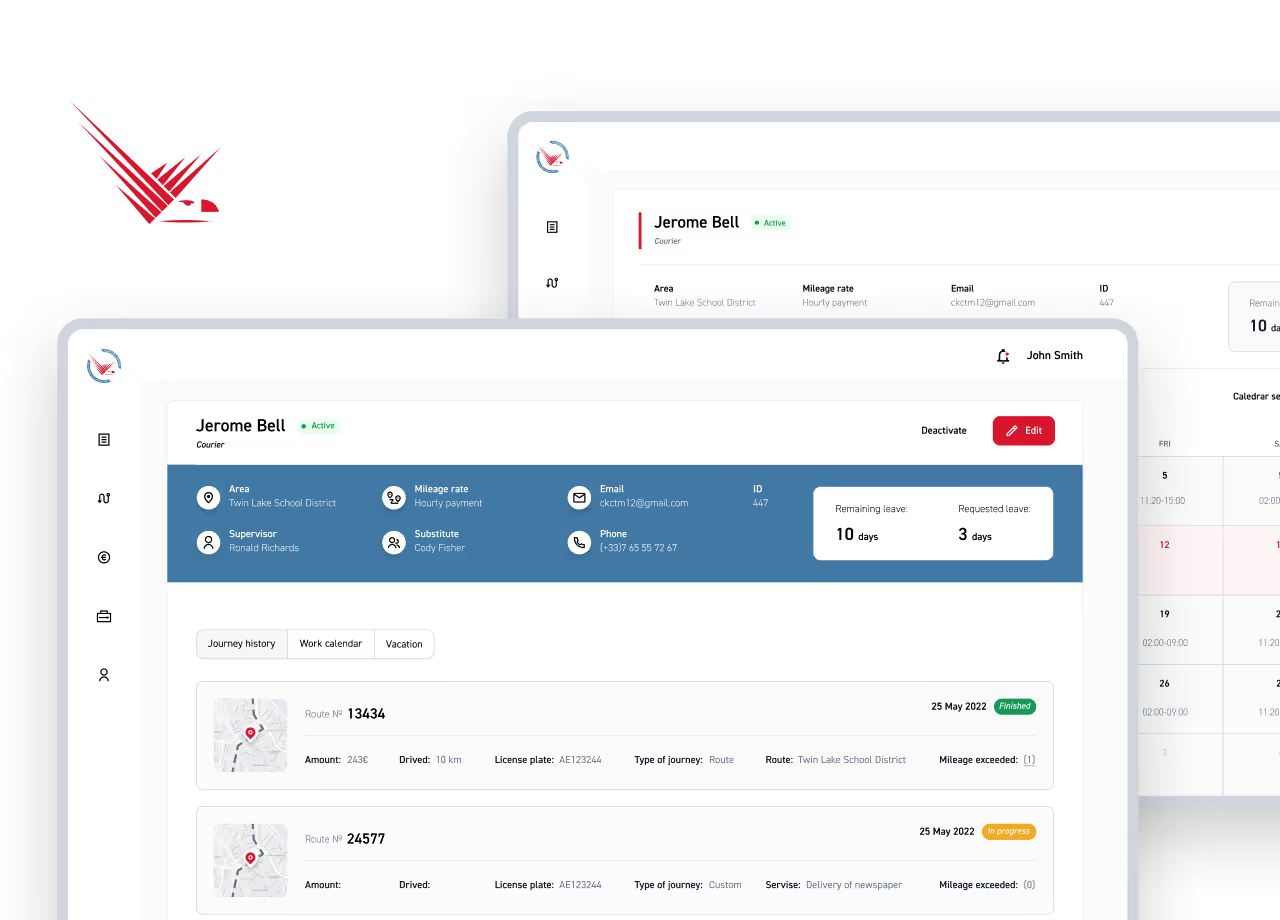
OÖ Medienlogistik
A fully integrated platform that replaced multiple legacy systems and SaaS tools for an Austrian print media distribution company. Fleet management, real-time route optimization, dynamic dispatching, mileage verification, courier scheduling, and automated payroll - all connected across operations, HR, and finance in a single system.

Multi-Sided Delivery Platforms
The user-facing flow is simple - order, deliver, done. The system behind it isn't. Multiple roles sharing live data, payment logic that breaks across borders, and operations that need to scale from day one to peak season without manual workarounds.
That's the kind of transportation and logistics solutions we've built twice - in Denmark and on Nantucket - each time under tight launch deadlines.
What we've built:
-
Two-sided and three-sided delivery platforms with distinct interfaces per user role
-
Real-time order tracking, status updates, and receipt verification
-
Payment systems handling regional edge cases - Stripe, SEPA instant payments, automated tip splitting to individual courier accounts
-
Operational CRMs with order management, courier performance tracking, and admin dashboards
-
Rapid launch timelines (3 months for four native apps; 2.5 months for a full web platform) without sacrificing architectural quality
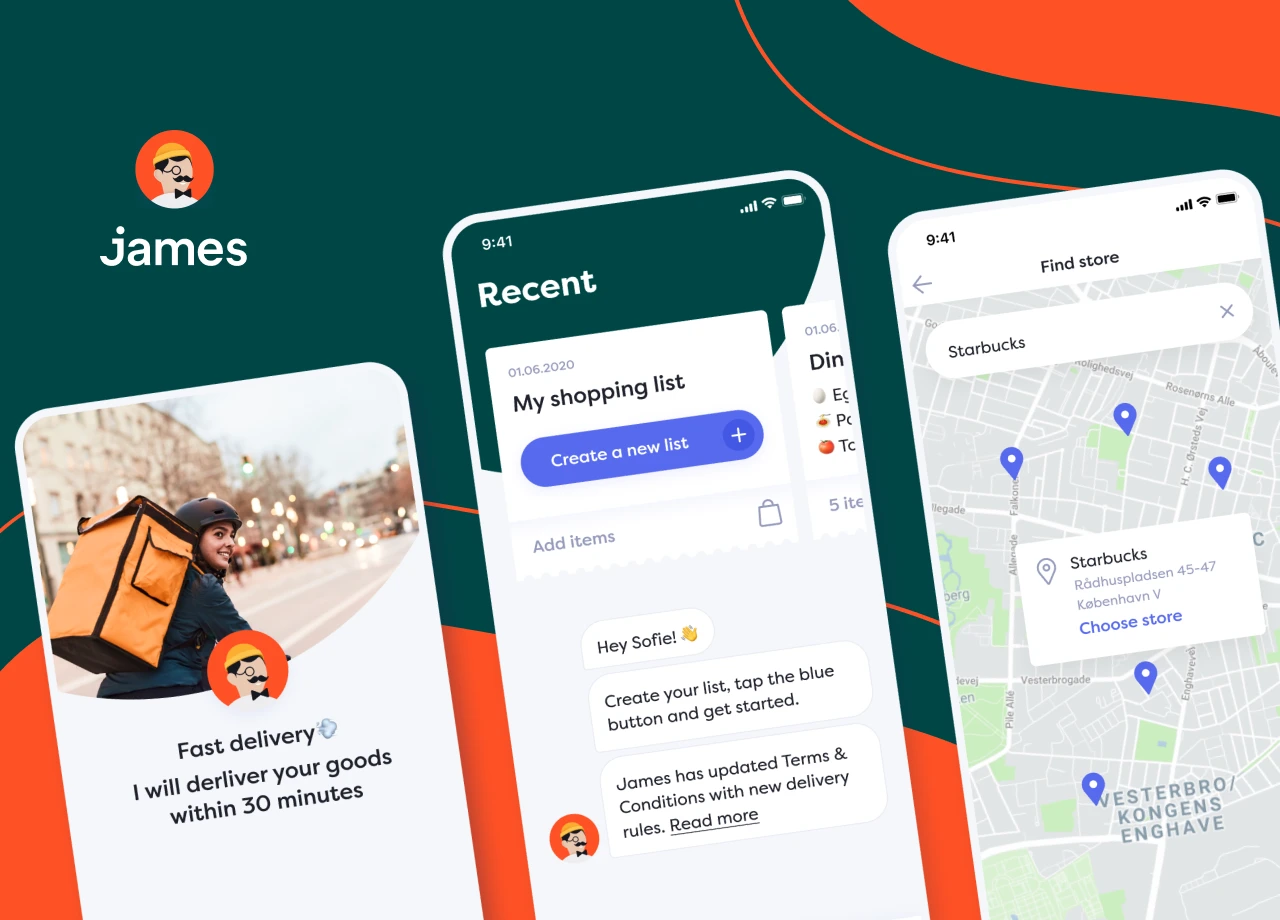
James Butler
Four mobile applications (iOS + Android for both buyers and shoppers) plus backend and admin panel, built in three months. Shopping list-based ordering, real-time tracking, and a custom payment system integrating Stripe with Danish SEPA instant payments when Stripe couldn't handle local requirements. 4,600+ registered buyers and 4,000+ completed orders within three months of launch.
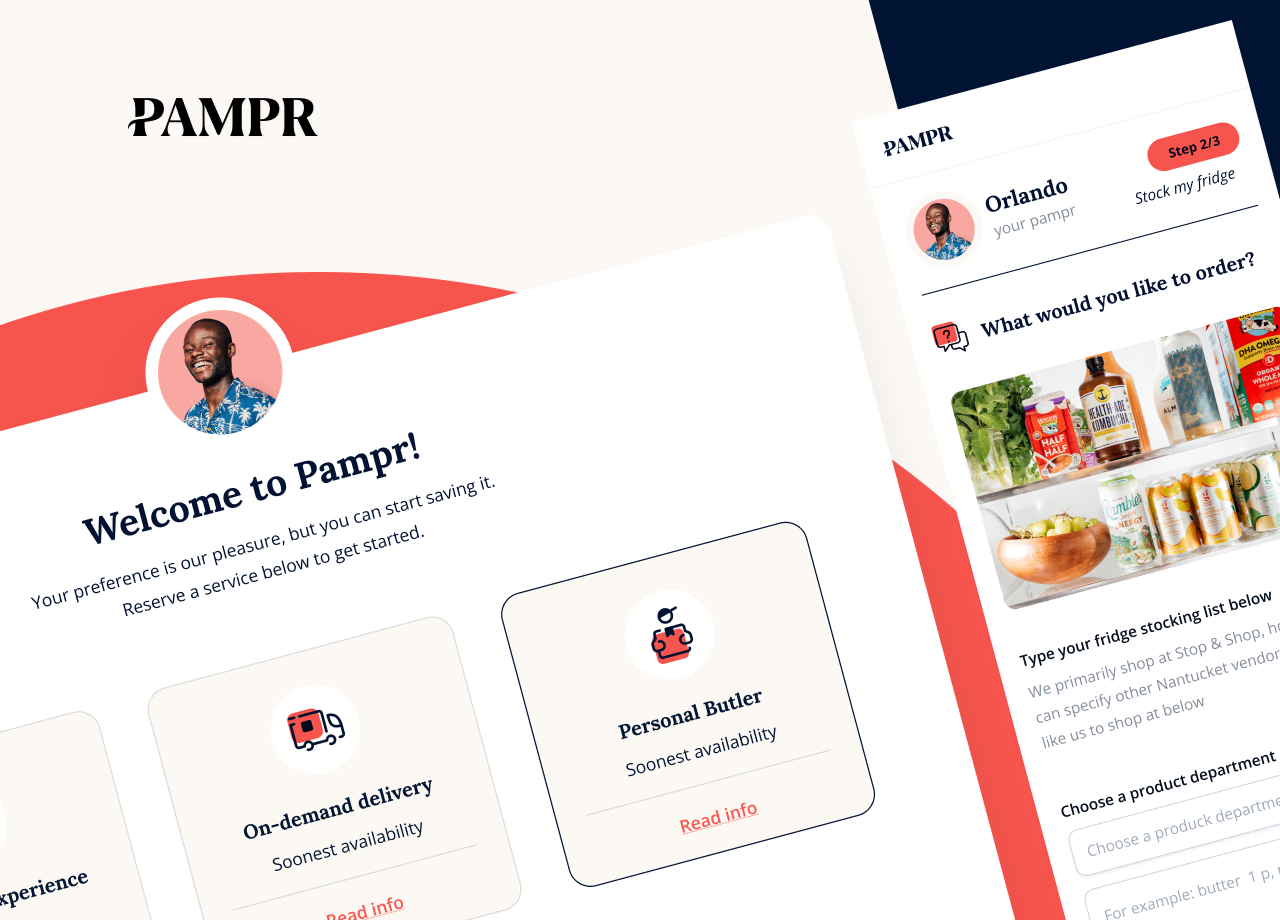
Pampr
A web platform digitizing a luxury concierge delivery service with three user roles, categorized ordering flows, and Stripe payment integration with automated tip splitting. 560+ customers, 1,000+ orders, and 2,000+ hours saved in a single summer season.

Our couriers finally trust that their paychecks reflect the work they actually do — and we've cut admin work by half. It's a win for everyone.
what we bring from other industries
Being multi-industry isn't a limitation —
it's how we find solutions that single-vertical firms miss.

Compliance designed into the architecture
Building HIPAA-compliant healthcare systems and delivering for government-affiliated institutional clients taught us to embed regulatory requirements into system design from day one — not bolt them on before launch.
The same discipline applies to ELD compliance, FMCSA hours-of-service rules, hazmat documentation, customs requirements, and the audit trails that logistics operations demand.
AI built for live operations, not pilots
We've shipped production AI across enterprise content systems, document scanning and OCR, predictive marketplaces, and computer vision for commercial use.
Logistics is moving AI from demos to real operational decisions — route optimization, demand forecasting, anomaly detection, predictive maintenance — and that transition needs teams who've already done it in other domains.
Coordinating parties who each see different data
Building platforms where owners, tenants, agents, coaches, athletes, and service providers all interact with shared operational data — each through their own interface with their own permissions — taught us patterns that transfer directly to carrier/shipper/dispatcher coordination, warehouse owner/renter workflows, and fleet operator/driver/admin systems.
Build & Scale
New logistics platforms — fleet management, delivery systems, booking marketplaces — designed for multi-role complexity and real-time requirements.
Modernize
Replace spreadsheets, manual processes, and fragmented SaaS tools with integrated platforms — without disrupting live operations.
AI & Intelligent Systems
Route optimization, demand forecasting, anomaly detection, predictive maintenance — intelligent capabilities grounded in your operational data.
Building or modernizing logistics technology?
Let's talkWhat types of logistics software does Mind Studios build?
We build custom logistics software across two main areas: enterprise fleet operations and multi-sided delivery platforms. This covers fleet tracking, dynamic dispatching, mileage-based payroll automation, multi-role delivery apps, payment systems, and operational CRMs. More broadly, our logistics application development services cover any system where operations, data, and user workflows need to connect — custom solutions for the logistics and transportation industry that are built around your operational model, not adapted from a generic template.
How long does it take to develop custom logistics software?
Timeline depends on scope, but here are two reference points from our own work: four native mobile apps in three months (James Butler), and a full web platform in 2.5 months (Pampr). Enterprise custom logistics software development with backend integrations — like the Medienlogistik platform — takes longer and runs in phases. We'll give you a realistic estimate after a scoping call, not before.
How much does custom logistics software development cost?
There's no standard number for custom transportation software development services — it depends on the number of user roles, integration complexity, platform type (mobile, web, or both), and whether you're building from scratch or extending an existing system. We work across fixed-price, T&M, and dedicated team models. Transportation and logistics software solutions at the enterprise level typically involve a BA phase first, which shapes the scope and the estimate. We offer a free pre-contract consultation to help you understand what you're actually building before committing to a budget.
Can you integrate with our existing TMS, ERP, or third-party tools?
Yes. Integration work is a core part of most logistics software development services we deliver — not an afterthought. We've connected fleet management systems with HR and finance tools, integrated payment providers handling regional edge cases (Stripe, SEPA), and built platforms that replaced multiple legacy SaaS subscriptions with a unified system. If you have an existing TMS, ERP, or third-party toolchain, we scope the integration during the BA phase.
Do you provide support after the logistics platform launches?
Yes — ongoing support is a standard part of how we engage. Several of our transportation and logistics solutions have been in active development since 2019. Post-launch, we handle bug fixes, performance monitoring, feature iterations, and infrastructure scaling as your operations grow. We structure this through a dedicated team or T&M retainer depending on what the product needs.
Mind Insights
Into custom software development.
Logistics Process Automation: Faster Orders, Fewer Mistakes, Bigger Margins
Discover how logistics automation software transforms businesses through efficiency and scalability. Drawing from our experience, we’ll highlight benefits, key systems, and strategies to implement tailored solutions that drive success.

Logistics App Development Guide: Key Steps, Features and Costs
This guide covers the essentials of logistics app development, addressing key industry challenges, app types, essential features, and steps to create a successful logistics app. Learn about the advantages of custom solutions, important tech stack choices, and the factors influencing logistics app development costs.
Top 7 Logistics Challenges in 2026 and Software Solutions to Overcome Them
Here, we are going to talk about challenges of logistics and ways to mitigate them with custom software solutions. We will also present you with our actionable insights and useful tips (don’t miss out on them!).