
 ChatGPT
 Perplexity

Software project rescue gets a stalled product shipping again. Here is how to choose between fixing, switching teams and rebuilding without losing control of your code.
Highlights
- Rescue starts with an assessment. Switching vendors is one possible outcome.
- A signed IP assignment usually transfers ownership of vendor-created code to your company.
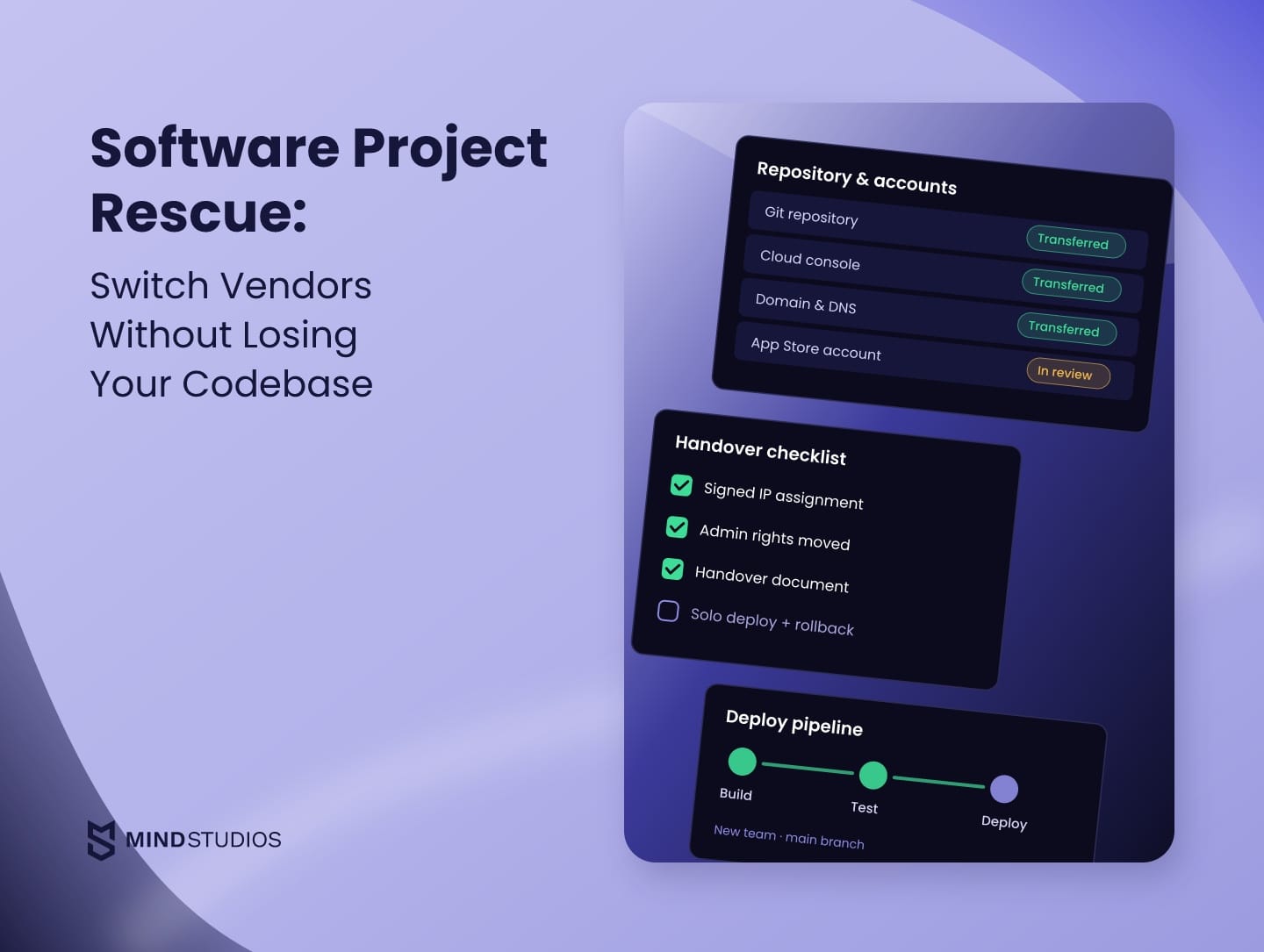
- A handover is done when the new team builds, deploys and rolls back alone.
Software project rescue takes a project that keeps missing deadlines, budget or quality targets and makes delivery reliable again. The evidence then points to one of three paths: fix it with the current team, hand the same code to a new team or rebuild.
Before choosing a path, confirm which code your company owns, what its licenses permit and whether the incoming team can access the systems it needs. Through our software modernization work, Mind Studios takes over systems whose original team is gone or stuck, and we audit before recommending anything.
If you can't tell yet whether your project needs a new team or a clearer plan, settle that first with engineers who have read the code.
What software project rescue means for a founder
For a founder, software project rescue is a decision process with a fixed order. It starts with an independent look at the code, the infrastructure and the way work gets done, and it ends with a recommendation backed by evidence.
The order matters because slipping dates, vague updates and a growing bug list look alike whatever the cause. A vendor hired on symptoms alone can inherit the very problem it was hired to fix.
The assessment may recommend changing the vendor or rewriting from scratch, and both come after the rescue work itself. That work covers what comes before them: a health check, stabilization if production is failing, an audit, and secured rights and access.
Signs your project needs rescue (and when the team isn't the cause)
Repeated delivery failures call for an assessment, and any of five signs is reason enough to start one: unexplained slipping deadlines, scope that shifts every sprint, quality that drops with each release, vague communication or constant changes in the vendor's staff. The signs show where to look. They don't yet show who caused the problem.
Most symptoms can start on either side, and the evidence shows which:
| Symptom | Team-side evidence | Your-side evidence |
|---|---|---|
| Missed deadlines | Estimates miss on stable, agreed scope | Scope or priorities changed mid-sprint |
| Falling quality and regressions | Changes ship without tests or code review | Acceptance criteria were never written down |
| Vague communication | Status reports skip what shipped and what's blocked | Questions to your side wait days for answers |
| Turnover on the vendor side | Deploy knowledge sits with one person | Team changes followed your budget or scope cuts |
If open decisions on your side block delivery, those delays would follow the project to any new team. In that case, a software project rescue starts by naming a decision owner.
Dmytro Dobrytskyi, CEO at Mind Studios, explains why the request gets tested before the team, a habit that shaped the FITR platform too:
Founders often arrive with a request and a verdict on the team already attached. We treat both as hypotheses until someone has asked what the product has to do next. When that question changes the request, swapping the team alone would have solved the wrong problem, and at a higher price.
Four questions to ask your current team this week
Ask the current team these four questions and note how specific each answer is:
- "Can you show me the last two sprints of completed work?" A delivering team can point to finished, demoable work.
- "Who owns the deploy process, and what happens if they're unavailable tomorrow?" A single name is a risk whether you switch or stay.
- "What's the single biggest known issue in the codebase right now?" A specific answer signals candor.
- "If a third party reviewed this code tomorrow, what would they flag first?" The answer tells the audit where to look first.
The last five decisions that held up a sprint can also help locate the bottleneck. If most waited on your side, clarify decision ownership; if they waited on the vendor, bring those examples to the audit.
Fix in place, change the team or rebuild: how to decide
Five factors decide the path: the state of the code and architecture, what you've invested and what's left to build, the deadlines you've committed to, the age of the stack and your contracts. Make the call after the audit and with the team that will run the product next, because that team carries the consequences.
Contracts can rule out a technically sound path, since notice periods, SLAs promised to customers and unsettled IP terms all limit options. The three paths compare like this:
| Path | When it fits | Main risk | What to check |
|---|---|---|---|
| Fix in place | Sound code, capable team, process gaps | Old habits return | Team accepts outside review |
| Change the team, keep the code | Workable code, weak delivery | Knowledge lost in handover | Build, deploy and docs can move |
| Rebuild | Stack or architecture blocks key features | Cost and a gap without new value | Data and users can migrate cleanly |
If the audit points at an aging core, our guide to legacy modernization strategies covers the options between patching and a full rewrite.
When to change software development team members or the whole vendor
Change people when the audit shows workable code and a delivery problem in skills, planning or communication. If one or two people are the bottleneck, the vendor can replace them first; if the issues run through the whole team and its process, change the vendor.
If the latest release is stable, the gap before the next development cycle offers a practical handover window, provided open incidents are known and rollback works. Right before a release is the worst time, because a new team would have to ship code it has never deployed.
When rebuilding wins: the Envol example
The Envol wellness app, built for people with chronic illness, came to us as an existing Android app whose main problem was audio playback for guided meditations and healing music.
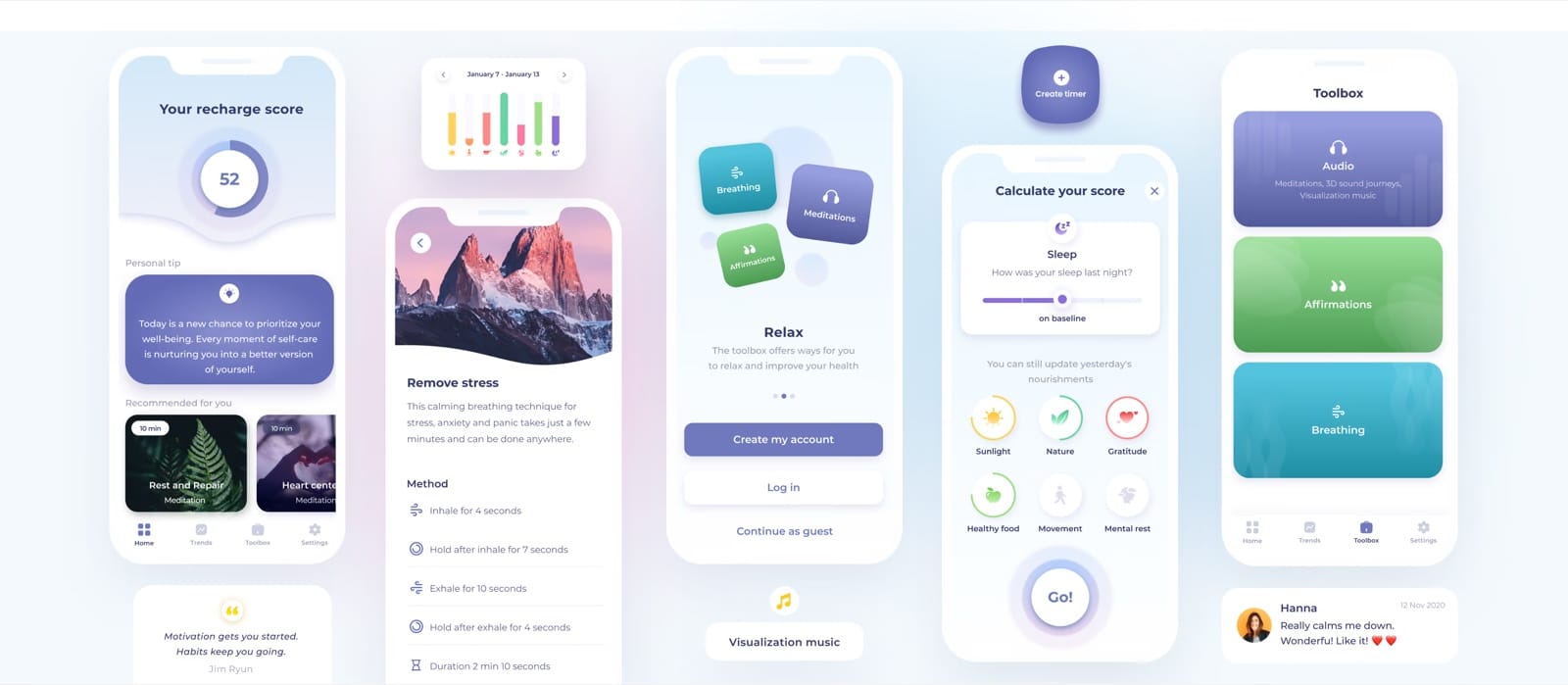
After discussing it with the clients, we agreed that a new app built from scratch made more sense in time and money, and we developed an iOS app in parallel.
All user data except passwords moved to the new app, with subscription statuses and tracking data matched to each account. Envol now has 12,000 downloads across platforms, over 8,000 active users and a 43% retention rate.

Code ownership: what to secure before you switch vendors
Settle code ownership and access before announcing a switch, since a software project rescue can only move what you're entitled to use and can actually reach. In the US, paying a vendor to write code doesn't by itself make your company the owner, so you usually need a written IP assignment and every production account in your company's name.
What US law says about who owns the code
Under 17 U.S.C. §101, work made for hire covers two cases. One is an employee's work within the scope of the job. The other is specially commissioned work in nine listed categories, and only when both parties sign a written agreement treating it as work made for hire.
The Copyright Office's Circular 30 explains the same test. Vendor code outside it generally reaches you through a transfer, which under 17 U.S.C. §204(a) needs a written instrument signed by the rights owner or its authorized agent, unless the transfer happens by operation of law.
Rules differ in the EU and MENA, so a lawyer should check your documents against the law that applies to your vendor.
What to check in the contract and accounts
Before the old team disengages, check the contract and accounts for:
- IP assignment: code, designs and documentation, signed by the vendor
- Chain of rights: proof the vendor holds what it assigns, such as assignments from its staff and subcontractors
- Deliverables: source code, build scripts, infrastructure configuration and documentation included
- Third-party and open-source components: listed separately, under their own licenses
- Termination terms: notice, handover duties and final delivery
- Repository: in your company's organization account, with the vendor as a member
- Production accounts: cloud, domain and app store accounts in your company's name, each with your own admin
Mind Studios' insight: Treat a vendor that withholds repository or account access the contract already grants you as a red flag. Settle payment disputes under the contract's terms and keep that access out of the negotiation.
Software escrow: protection to set up before trouble starts
Software escrow is a three-party agreement. The vendor deposits source code and related materials with an independent escrow agent, and you, the beneficiary, get access to them under procedures the agreement defines. It matters when the code your business runs on isn't in your own repository.
Saudi Arabia's Communications, Space and Technology Commission describes the same model in its software escrow guideline, launched in November 2025, as a business continuity measure.
Escrow fits a licensed platform at the core of your operations, a white label product you resell or a SaaS vendor whose outage would stop your business. If the repository already sits under your company's account, escrow adds little, because the two setups leave different gaps:
- Code in your own repository: you hold every commit. The gap is build knowledge and access, which the handover plan covers.
- Code with an escrow agent: you hold a conditional right to the code. The gap is a deposit that is outdated or won't build.
How source code escrow works
A source code escrow arrangement stands or falls on four terms:
- The deposit. Ask for source code plus build scripts, configuration and documentation, so a different team can produce a working build.
- Release conditions. Name the events that trigger delivery to you, such as the vendor's insolvency, the end of support for your version or a material breach. Have a lawyer review this wording, since it decides whether the code ever reaches you.
- Verification. Secure the right to have the deposit built into the software you run, which shows your team can actually use it.
- Updates. Tie deposit refreshes to releases, so the code you would receive matches production.
The software project takeover audit: stabilize first, then assess
A software project takeover starts with a quick health check of production. If users or revenue are affected, stabilization comes first. A full audit of the code, architecture, tests, security, infrastructure, documentation and technical debt follows, ending in a recommendation backed by evidence.
Stabilize when production is failing
The new team first contains critical bugs that block users or revenue and confirms backups with a tested restore. It also sets up a deploy someone on your side can run and secures access the old vendor can't cut off overnight.
What the takeover audit checks
Once production is steady, the audit covers the areas below, which a CTO on your side can use to judge the report. The first group concerns the product and its code:
- Build and deploy: whether the product builds from the repository and releases without one person's laptop
- Architecture: whether it can carry the next stage of growth and where it limits features
- Code quality: readability, duplication and consistency with the chosen framework
- Automated tests: what exists and what runs in CI/CD (the pipeline that builds, tests and ships each change)
The second group covers access, running environments and what slows the team down:
- Security and access: who holds credentials, how secrets are stored and which dependencies have known vulnerabilities
- Infrastructure: cloud accounts, environments, monitoring and running costs
- Documentation: what exists and whether it still matches the code
- Technical debt: shortcuts that slow every change, ranked by business impact
Our software audit guide goes deeper.
Three ways the audit can land
Each recommendation should rest on its own evidence:
- Fix with the current team: sound code, with blockers in process or requirements.
- Hand the code to a new team: workable code, with delivery as the weak point.
- Rebuild: an architecture or stack that blocks the roadmap, plus the data and users that must migrate.
Mind Studios' recommendation: Judge the report by its critical findings. Each one should carry the evidence, the consequence for the business, an owner and a way to verify the fix. A finding missing any of those is an opinion you can't plan or budget against.
If nobody on your side can say whether the next deploy is safe, that's the first problem a software project rescue should take off your hands.
Software project handover: a step-by-step vendor transition plan
A safe vendor transition runs in five steps, from closing the contract to full speed for the new team, and each step ends with a result you can check. Two moments need planning: what you confirm before notifying the vendor and what must be complete before the contract ends.
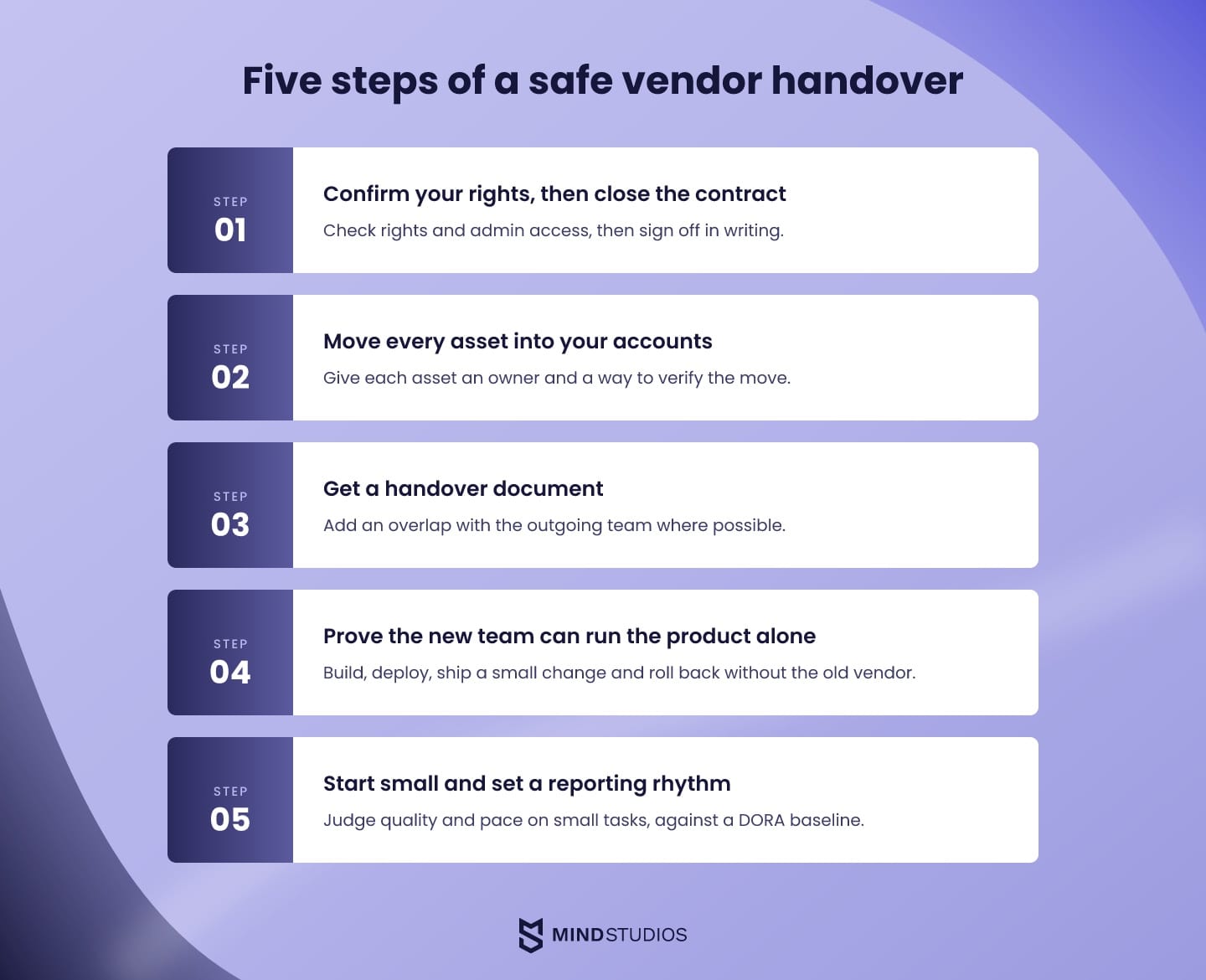
Step 1: Confirm your position, then close the contract
Before notifying the vendor, confirm the rights you hold, your own admin access and any systems only the vendor controls. Close the contract in writing once your lawyer has checked the transfer documents and the vendor's chain of rights. The handover record should list licensed components apart from assigned work.
Step 2: Move every asset into your company's accounts
Complete this matrix before the contract ends, since some transfers need the old team. Each asset gets an owner and a check:
| Asset | Owner after handover | Verification |
|---|---|---|
| Source code repository | Your organization account | The new team clones and builds from it |
| Cloud and infrastructure accounts | Your company, billing included | Your staff hold the admin login |
| Domains and DNS | Your company's registrar account | Renewals and DNS edits work from your login |
| App store accounts | Your company's developer accounts | You can submit a build |
| CI/CD pipelines | Your organization | The new team triggers a pipeline run |
| Documentation and task history | Your workspace | Exported or moved, with working links |
| Third-party service keys | Your company's accounts | Keys reissued for payments, email and maps |
Until every row passes its check, the transfer isn't finished.
Step 3: Get a handover document and, if possible, an overlap
While the outgoing team is still engaged, ask for a short systems overview and, where the relationship allows, a brief overlap, so questions get answered while the original developers are available.
If the previous team is unavailable, the new team rebuilds the system map from the repository, configuration, logs and backups. It lists any dependency it can't trace as a stated limit of the estimate.
Mind Studios' recommendation: Ask for two tight pages: architecture at a glance, known issues, unfinished work, and how to deploy and roll back. A useful test is whether a new engineer could ship a small change using only that document and the repository.
Step 4: Prove the new team can run the product alone
Working in the same stack, the new team builds the product from the repository, deploys it, ships one small change and performs a rollback (a return to the previous working version). Changing the stack in the middle of a handover would add risk when you can least afford it.
Moving the repository and closing old access are separate tasks. GitHub's transfer documentation states that collaborators stay on a transferred repository and that webhooks, secrets and deploy keys remain attached.
After the transfer, remove former collaborators and delete their deploy keys (keys that let a server pull the code). Then rotate every secret and service password, and keep only the access each person or service account still needs.
Step 5: Start small and set a reporting rhythm
Small, reviewable first tasks let you judge quality and pace before anything critical depends on the new team, and a weekly demo with a short written status keeps you close to the work. Record a baseline for the five DORA delivery metrics at handover, and read speed together with failure and recovery trends:
- Deployment frequency
- Change lead time, from commit to production
- Failed deployment recovery time
- Change fail rate, the share of deployments that need immediate intervention
- Deployment rework rate, the share of unplanned deployments caused by production incidents
Transition risks and how to protect against each one
Transition risks in a software project rescue fall into four groups: lost knowledge, unconfirmed rights, broken access and regressions after the switch. Our guide on managing development risks covers the wider practice behind this table.
Rights to the code count as confirmed only when the contract and applicable law support them, so a lawyer checks the assignment against §101 and §204 (or local law) before the switch is public.
Access disputes with the outgoing team are headed off in advance: confirm your own admin access before notice, and complete the step 2 matrix before the contract ends.
Knowledge loss needs the handover document, an overlap where possible and the takeover audit together, since any one alone leaves gaps. Budgeting stabilization and mapping up front works the same way for cost, so extra work in the first weeks is expected. The full set of risks looks like this:
| Risk | Mitigation |
|---|---|
| Knowledge loss when the old team leaves | Handover document, overlap where possible and takeover audit |
| Undocumented code slows the new team | Audit before committing; time for mapping after the handover document |
| Unconfirmed code rights | A lawyer's check of the assignment |
| Access disputes | Admin access and the asset matrix secured in advance |
| Delivery gap during ramp-up | Small first tasks, a re-estimated timeline, no switch right before a release |
| Early costs exceed the plan | Stabilization and mapping budgeted up front |
| Regressions after the team change | Automated tests on critical flows; code review on every change from the first commit |
| Morale drops on the outgoing side during overlap | A clear scope and end date for the outgoing team |
Each of these risks has a specific defense.
Taking over an existing product: how it worked for FITR
FITR shows why a founder's first request deserves a second look. The founder brought an existing app with part of the planned functionality and initially asked for updates and maintenance.
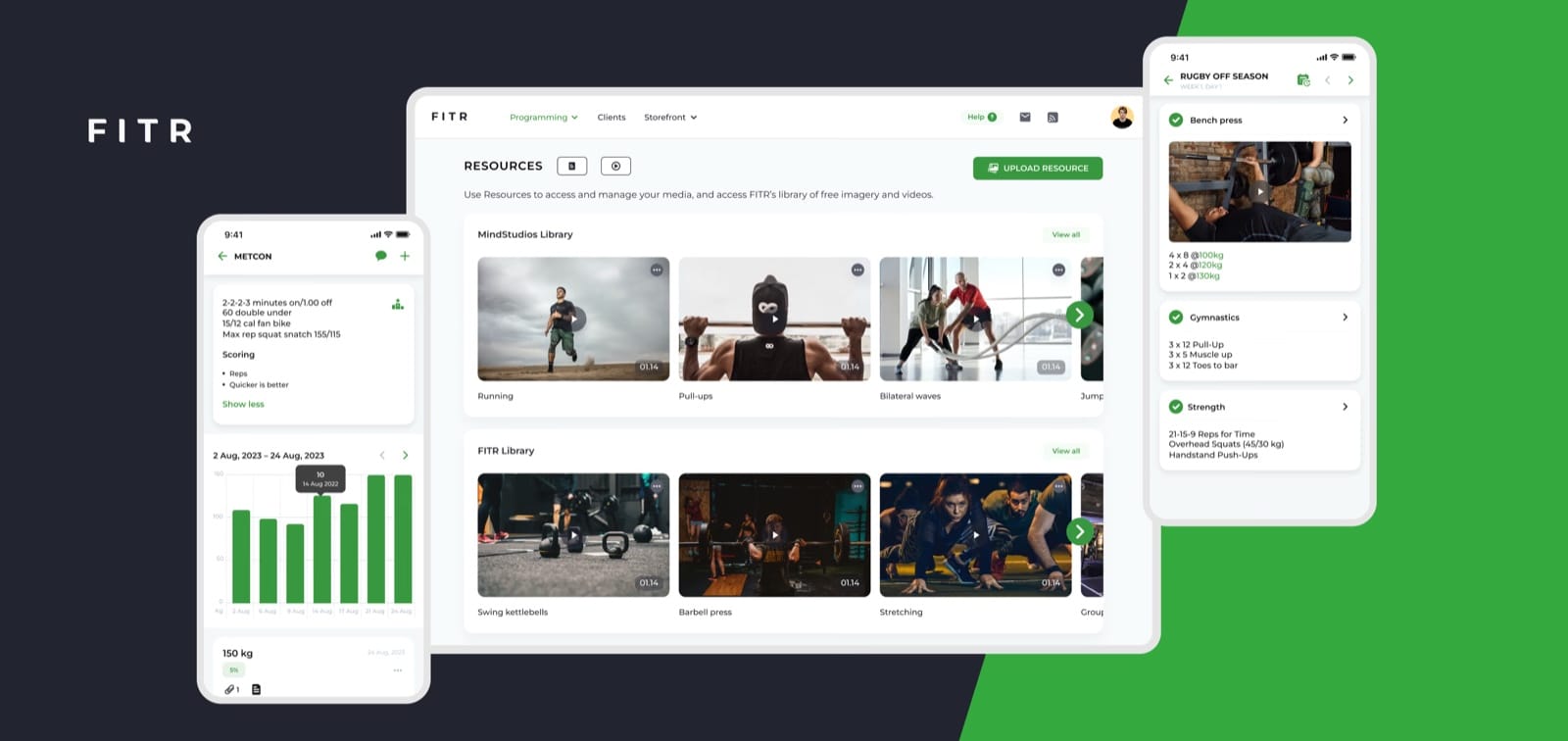
Discussing the product's requirements led to a decision to build a new, better version. Discovery then showed that a web interface suited coaches managing programs and clients, and that customer acquisition cost was significantly lower for web fitness platforms than for mobile apps.
So the coach side launched on web, with iOS and Android apps for athletes. The new build grew into the platform coaches use today, and the partnership continues, with over £10 million earned by coaches on the platform and over 30,000 personal programs published.
How to choose a software project rescue company
Choose a software project rescue company on evidence of how it handles someone else's code, from the first audit to the support that follows handover. The following criteria help you assess what a prospective partner brings to the first conversation:
- It has taken over existing codebases and can point to a published case.
- It proposes stabilization and an audit before estimating new features.
- It will recommend keeping your current team when the audit supports that.
- Its contract assigns IP to you and keeps accounts in your company's name.
- It works in your current stack and justifies any migration with audit findings.
- It defines handover acceptance in writing: build, deploy, small change and rollback.
- It names who stays on the product after handover and what support looks like.
Certifications offer another check on how a partner handles your code and accounts. Mind Studios holds ISO 27001 certification for information security management and ISO 9001 certification for quality management.
On continuity, 70% of our clients stay with us for three years or longer, and our partner selection guide covers the wider vetting process.
Anton Baryshevskyi, Head of Business Development and Co-Founder at Mind Studios, names the question he'd put to any takeover partner:
Founders in a crisis usually ask us how bad it is. A more useful question for any partner is which path it rejected and why. With Envol, the rebuild was a call we made with the clients after weighing it against improving the app they had. A partner that can't show you the option it turned down hasn't really assessed your product.
Where this leaves you
A project that keeps missing deadlines, where this guide started, still has a way forward that protects what you've already built:
- Diagnose with evidence, since some causes follow the project to any vendor.
- Audit before you commit, once production is under control.
- Transition by plan, with rights, accounts and acceptance checks closed before the old team leaves.
Every software project rescue we take on starts with engineers reading the code before anyone rewrites it, because that shows what your product still holds.
If you want to know what your codebase can still carry, our engineers can review the repository and tell you what to keep, fix or replace.
FAQ
What is software project rescue?
Software project rescue is the term for regaining control of a product that already has users but has stopped delivering reliably. It differs from ongoing maintenance in its starting point: an independent assessment comes before any new feature work, and the result is a written decision on the path forward.
How do you rescue a failing software project?
Some steps are yours to take before anyone new joins:
- Confirm that you hold admin access to the repository, cloud, domains and app stores.
- Pull the contract and find the IP and termination clauses.
- Write down what done means for the current release.
- Bring in an independent team for stabilization and an audit, then choose a path.
Is software development project rescue cheaper than starting over?
That depends on how much working code the audit finds. A software development project rescue tends to cost less when most of the code is reusable. A rebuild can be the better call, as with Envol, where a new app made more sense in time and money than improving the existing one.
What is a source code escrow clause?
It's the part of a license or development contract that requires the vendor to deposit source code with an independent agent and defines when you receive it. Check three things: release conditions in plain terms, build scripts and documentation in the deposit, and your right to verify that the deposit builds.
What is a software escrow agreement?
It's a contract between three parties:
- The vendor, who deposits the code and keeps it current
- The client, who receives the code if a release condition occurs
- The escrow agent, who holds the deposit and can verify it
The best time to propose one is when you sign the license, while you still have leverage.
How do I get my code back if the old vendor won't hand it over?
Start with the contract, and keep everything in writing:
- Find the IP assignment or work-for-hire clause and the termination terms.
- Send a written request that lists every asset: repository, accounts, keys and documentation.
- Bring in a lawyer. Under 17 U.S.C. §204(a), a transfer other than by operation of law needs a signed written instrument.
What do software project rescue services include?
Software project rescue services usually cover production stabilization, a takeover audit, a written recommendation to fix, transfer or rebuild, the handover with access secured, and continued development. The cost depends on the size and condition of the codebase and how much stabilization it needs before new work starts.